How I Evaluate Whether a Ballet Student Is Ready for Pointe
One of the questions I hear most often from ballet teachers is:
"How do you know when a student is ready for pointe?"
It's an exciting milestone for dancers and their families, but it's also one of the biggest responsibilities we have as teachers.
There isn't one exercise or one test that magically tells us a student is ready. Instead, I look at the whole dancer. Over the years, I've found that pointe readiness is a combination of maturity, strength, technique, control, and consistency.
Here are the qualities I look for before recommending that a student begin pointe work.
1. Maturity Comes First
Before I look at feet or technique, I look at the dancer.
Pointe shoes require responsibility.
Students need to understand that pointe is a process, not simply a reward for reaching a certain age. They need to arrive prepared for class, care for their shoes properly, listen carefully, and understand that safety always comes before rushing ahead.
A mature dancer is much more likely to have success because they understand that consistent work over time produces results.
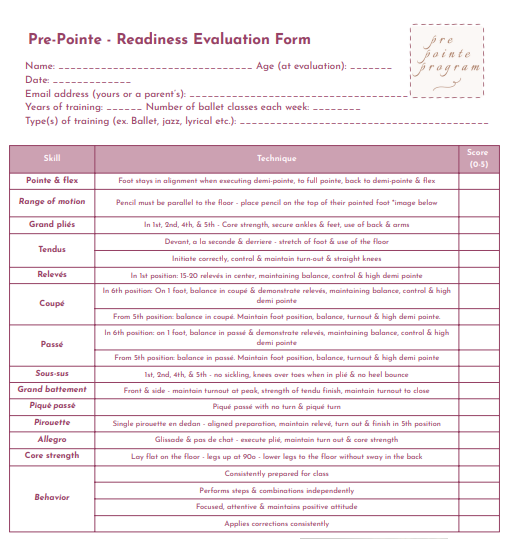
One section of my Preparing for Pointe Evaluation focuses on the qualities I assess before recommending a student begin pointe.
2. Sufficient Range of Motion
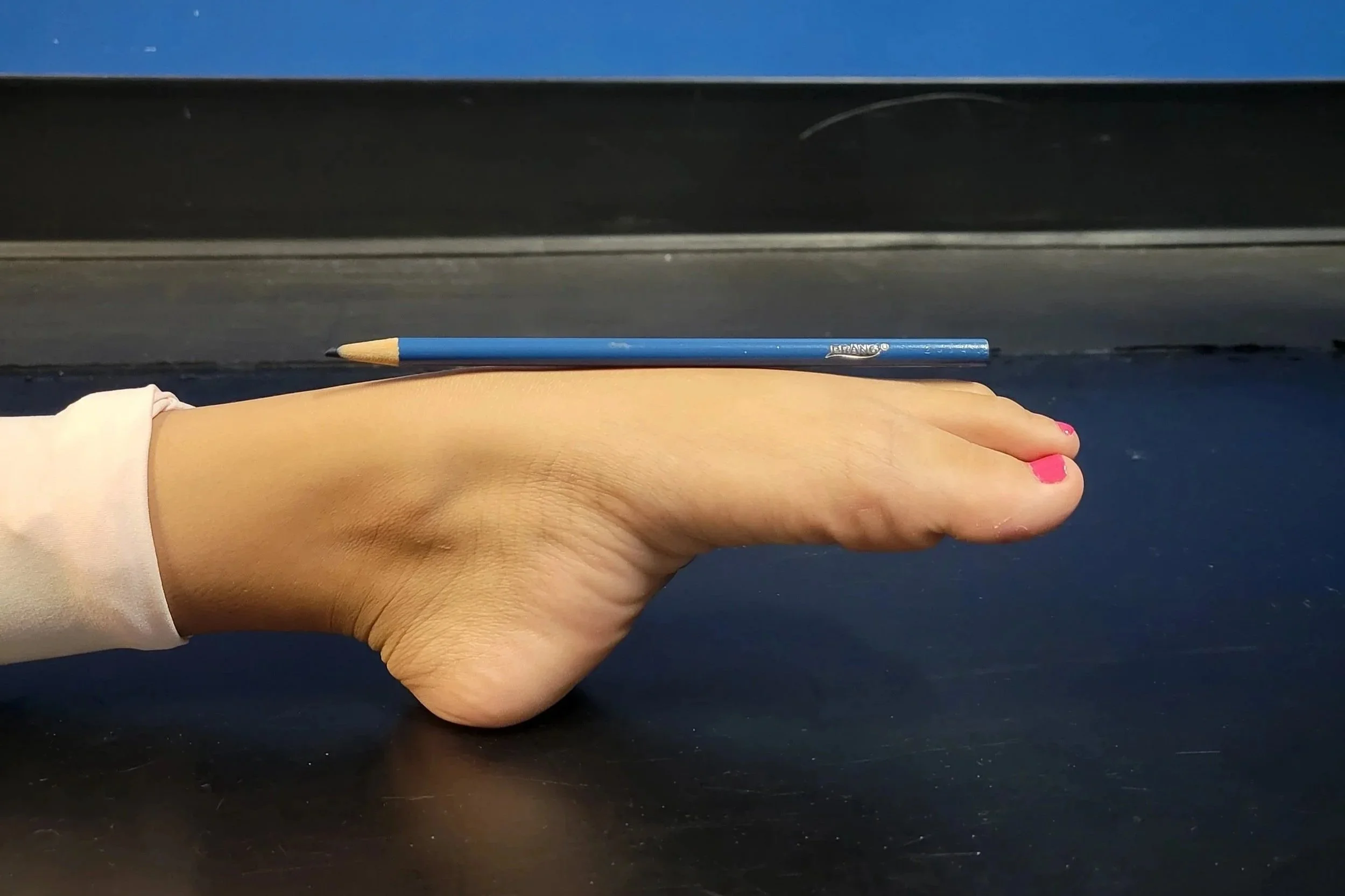
Many teachers talk about the "pencil test," and while I do evaluate range of motion, I don't believe a dancer needs to have absolutely perfect feet to succeed on pointe.
I've had students with less-than-ideal feet transition beautifully to pointe. Sometimes it simply takes trying a few different styles of pointe shoes before finding the one that best complements their individual foot.
What matters most is whether the dancer has enough range of motion to comfortably get over the platform of the shoe.
If the range of motion is significantly limited, students often struggle to achieve proper placement, become frustrated, and may even increase their risk of injury.
3. Control of Their Turnout
Perfect turnout has never been my expectation.
Controlled turnout is.
I want to see dancers actively using the turnout they have rather than forcing more than their bodies can safely maintain.
Students should demonstrate that they understand where their turnout comes from and continue working to strengthen and activate it throughout class.
Control will always serve them better than quantity.
4. They Take Corrections and Apply Them
One of the greatest indicators of readiness has nothing to do with feet.
It's how a student responds to corrections.
When I consistently give the same correction class after class, I begin asking myself whether the student is truly ready for the additional demands of pointe.
Students preparing for pointe should be able to hear corrections, apply them, and make noticeable improvements without constant reminders.
That ability becomes even more important once pointe shoes are introduced.
5. Strength and Alignment in the Supporting Leg
I pay close attention to the supporting leg during everyday ballet exercises.
Can the dancer maintain proper knee alignment during a demi-plié on one leg?
Does the heel remain grounded?
Can they use that plié effectively when moving into steps such as piqué passé or allegro?
These movements tell me a great deal about both strength and control.
I also watch piqués carefully.
Students should be able to maintain a completely straight supporting knee as they push onto a high demi-pointe.
Once they put on pointe shoes, they'll need to rise nearly two inches higher to reach the platform of the shoe. Developing that strength before pointe makes the transition significantly smoother.
6. Control Through Fundamental Technique
Another exercise I observe carefully is the grand battement.
Can the dancer keep the supporting leg straight throughout the movement?
A stable supporting leg demonstrates both strength and control. It becomes the foundation that allows the working leg to move freely while maintaining proper placement.
Strong technique is built from the ground up, and the supporting leg tells us a great deal about a dancer's readiness.
7. Strong, Clean Pirouettes - FROM 5th!
One of my favorite ways to evaluate overall readiness is through pirouettes from fifth position.
By the time students are approaching pointe, many can successfully perform pirouettes from fourth position.
Starting from fifth position requires a different level of control.
I'm looking for:
a high demi-pointe
a well-placed retiré
coordinated use of the arms
effective spotting
core strength
a controlled finish FRONT in fifth position
Whether turning en dehors or en dedans, this exercise reveals so many aspects of a dancer's technique working together.
It's less about the number of turns and more about the quality and control of the movement.
Pointe Readiness Is About the Whole Dancer
No single exercise determines whether a student is ready for pointe.
Instead, I look at the complete picture.
Is the dancer mature?
Are they strong enough?
Do they demonstrate control, consistency, and the ability to apply corrections?
Do they have the technical foundation needed to progress safely?
When those pieces begin coming together, pointe becomes a natural next step instead of a race to reach a milestone.
That's the philosophy behind my Preparing for Pointe Bundle. It was created to help ballet teachers confidently evaluate readiness, strengthen their students before pointe, and guide them through those important first months of pointe training with thoughtfully sequenced lessons and practical teaching resources.
After more than 40 years of teaching, one thing remains true: the strongest pointe students aren't always the ones with the most naturally beautiful feet—they're the ones with the strongest foundation.
What do you look for when evaluating pointe readiness?
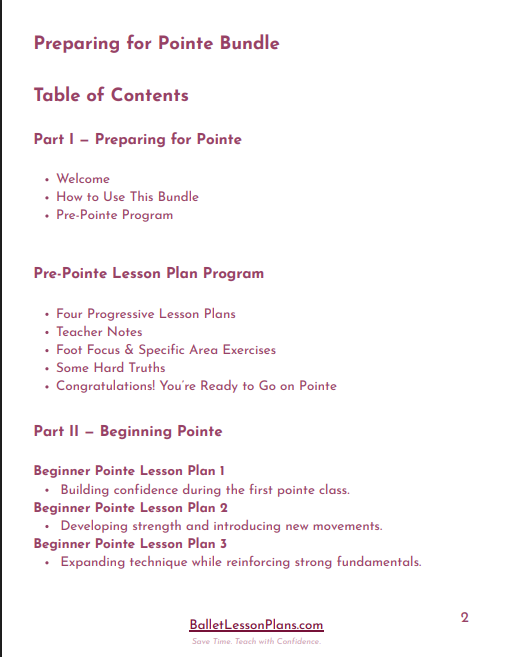
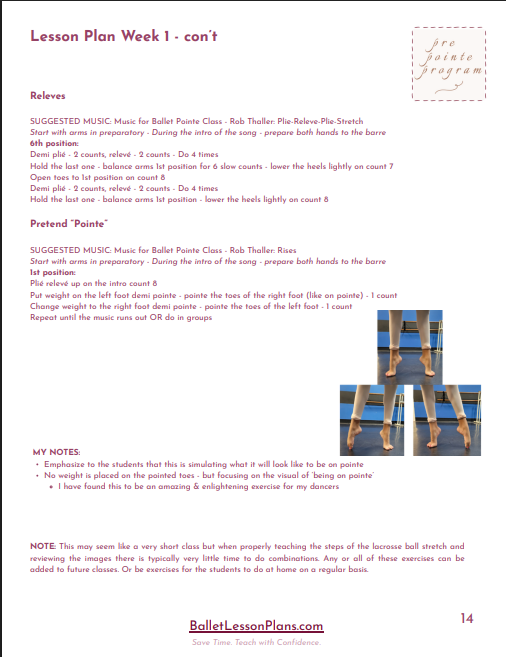
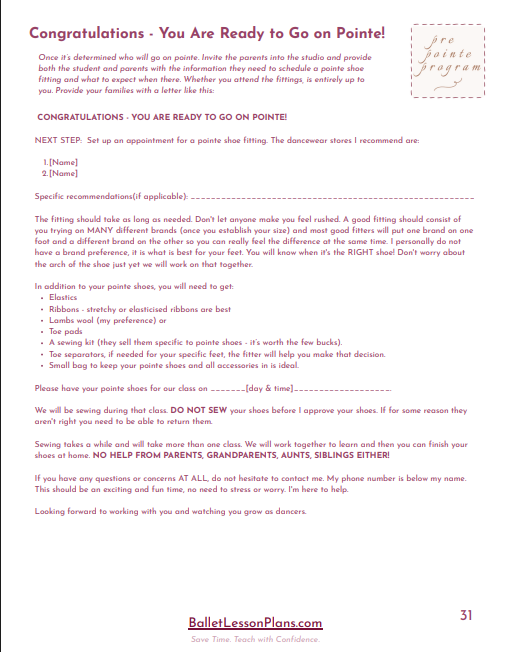
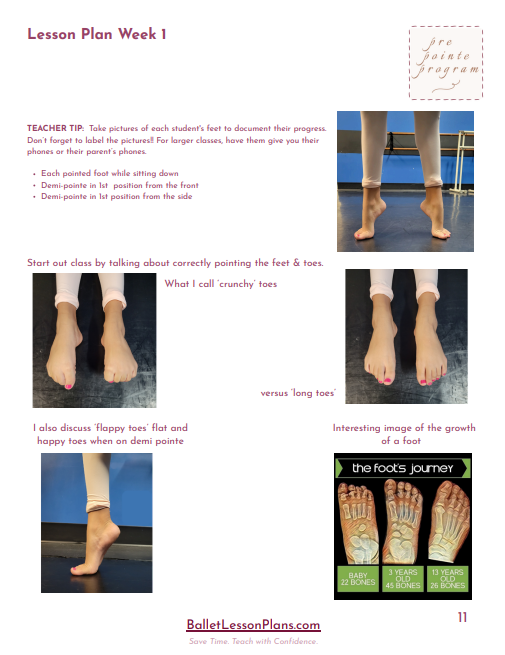
These are just a few of the resources included in the Preparing for Pointe Bundle.