Teaching Musicality in Ballet Class: 5 Ways to Help Students Dance Beyond the Steps
Have you ever watched a dancer perform a combination correctly, remember every step, and still feel that something is missing?
Sometimes the missing piece isn't technique. It's musicality.
Ballet students need to learn more than the steps in a combination. They need to listen to the music, understand its phrasing, recognize changes in tempo and dynamics, and allow those elements to influence how they move.
Musicality doesn't develop simply because we play music while students dance. Like turnout, coordination, and placement, it needs to be taught and practiced.
The good news? You don't need to create an entirely new class to work on musicality. You can incorporate it into combinations your students already know.
Here are five practical ways to help your dancers become more musical.
1. Ask Students to Listen Before They Move
We sometimes move quickly from demonstrating a combination to asking students to perform it. But have they actually listened to the music?
Before teaching an exercise, give students a moment to listen.
Ask them to notice the tempo, identify the beat, or listen for a particular musical phrase. Can they hear where the music changes? Does it feel light and playful, or slow and sustained?
You can even ask students to describe the music in their own words.
There isn't always one correct descriptive answer. What matters is that students begin paying attention to what they hear rather than treating the music as background sound.
Try this: Play a short section of music and ask students to clap the beat before performing the combination. For younger dancers, you might have them march or step in place to find the pulse.
2. Help Students Understand Musical Phrasing
Students often concentrate so hard on remembering the steps that they forget to notice how those steps fit into the music.
Musical phrasing helps dancers understand how movements relate to one another and where a combination naturally builds, resolves, or changes direction.
Start with a familiar exercise. Rather than adding new steps, ask students to notice where a musical phrase begins and ends.
Does the movement continue smoothly through the phrase? Is there a natural place for a balance, an extension, or a change of direction?
You can count aloud at first, then gradually encourage students to listen independently.
Try this: Have students perform a familiar combination once while concentrating on the steps and again while concentrating on the musical phrase. Ask what felt different.
Sometimes the best musicality lesson doesn't require a new combination at all.
3. Teach Dancers to Follow the Waves in the Music
One thing I often remind my students is that we shouldn't dance as if the music is one straight line.
Music has rises and falls. Some moments build, some soften, some stretch out, and others have a little extra punch. Our dancing can reflect those changes.
When I teach this, I often move my hand in a wave — up and down — to show my students how the energy of the music changes. I want them to see that a combination doesn't have to be performed with the same energy from beginning to end.
Think about the difference between a straight line and a wave. A straight line stays at the same level. A wave rises, falls, and changes direction.
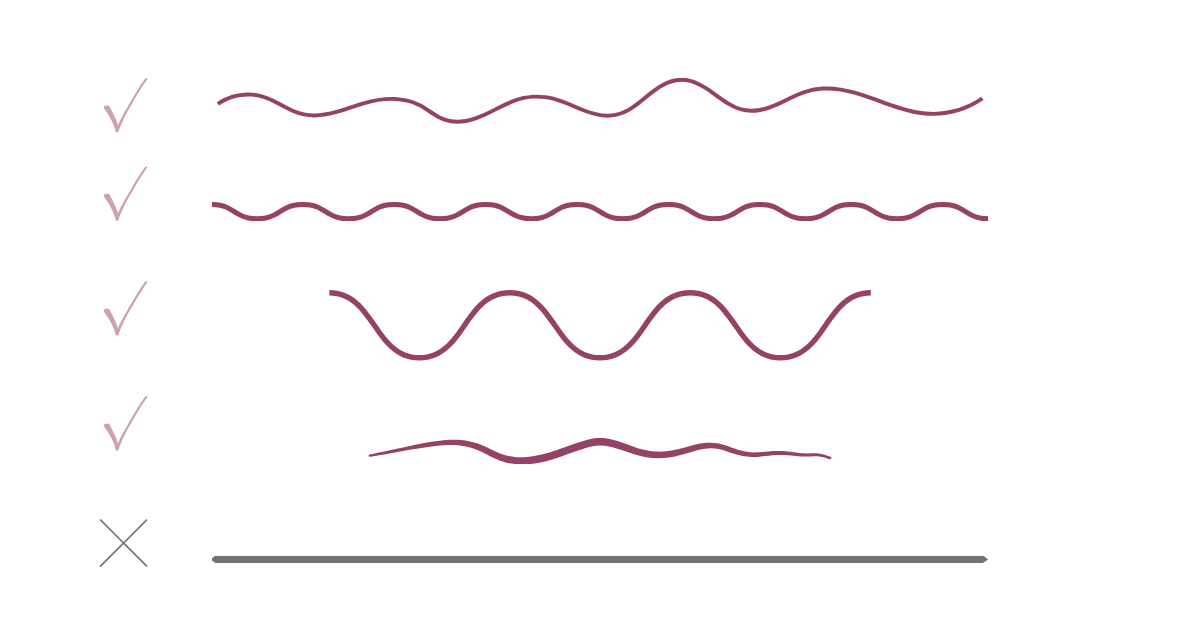
This simple visual helps dancers begin to understand how they can vary their movement quality to match the music.
Sometimes that means making a movement more expansive. Sometimes it means backing off, softening the energy, or allowing a moment to stretch rather than pushing through it.
The steps may stay exactly the same, but the dancing becomes much more interesting when the energy changes with the music.
Try this: Have students perform a familiar combination and ask them to identify one place where they could increase the energy and another where they could soften or sustain the movement. Then have them try it again, paying attention to those changes.
Encourage them to listen first and let the music guide their choices. You're not asking them to exaggerate every accent or make every movement dramatic. You're helping them discover that musicality includes contrast.
4. Choose Music That Supports the Exercise
Music selection can make a tremendous difference in how students experience an exercise.
The tempo needs to suit the movement and the students' abilities. The phrasing should support the combination, and the musical character should complement what you're teaching.
If students are struggling to coordinate a combination, consider whether the music is helping them or making the task more difficult.
Sometimes the solution isn't another explanation or another demonstration. It may be choosing music that makes the rhythm and phrasing easier to understand.
And don't underestimate the occasional surprise!
A familiar tune can bring a burst of enthusiasm to class. Students may respond with more energy when they recognize the music, even while working on a familiar technical exercise.
The key is to make the musical choice purposeful.
Try Something Unexpected: Use Pop Music!
I also enjoy using pop music occasionally to help students explore musicality.
A different style of music can encourage dancers to hear familiar movements in a new way. Where might they emphasize a movement? Where could they soften the energy, change the quality, or play with a musical accent?
And let's be honest — sometimes it's just plain fun!
The goal isn't to turn every ballet combination into a pop routine. It's to give students opportunities to listen, experiment, and discover how music can influence the way they move.
You might be surprised by the ideas they come up with when you give them permission to explore.
5. Give Students Something Specific to Listen For
“Be more musical” is a lovely goal, but it doesn't tell students what to do.
Instead, give them one specific listening task.
You might ask them to:
Listen for the beginning of each phrase.
Notice where the melody rises or falls.
Pay attention to a change in tempo.
Find the musical accent that matches a particular movement.
Finish a phrase with the music rather than rushing ahead.
Choose one focus at a time. When students are learning a difficult combination, asking them to concentrate on every musical detail at once can be overwhelming.
As their coordination and confidence improve, you can layer in additional challenges.
Over time, these small listening tasks help students develop greater musical awareness and independence.
Musicality Doesn't Require a Brand-New Lesson
One of the best ways to develop musicality is to revisit familiar material with a different focus.
You might teach a combination one week with an emphasis on coordination, then revisit it the following week with attention to phrasing or dynamics.
The steps don't have to change for the learning to deepen.
This is one reason I value thoughtful lesson planning. When you aren't constantly creating new material, you have more opportunity to observe your dancers, offer individual corrections, and help them explore the artistry behind the technique.
A lesson plan provides structure. Your experience and your understanding of your students bring that plan to life.
The goal isn't simply to have dancers who remember the combination. It's to help them become thoughtful, responsive, expressive artists.
And that development happens one class at a time.
Give Dancers Permission to Explore
One of my favorite things to encourage is for dancers to look in the mirror and really observe themselves.
What do they like about the way they're moving? Where does a movement feel natural? Is there a moment where they could change the energy, stretch out a phrase, or emphasize the music differently?
I encourage students to experiment. Try something one way, look at it, and then try it another way. Keep working with it until it feels right for them.
Of course, their choices still need to respect the technique, the choreography, and the musical structure we're working on. But within those boundaries, there's room for individuality.
I want students to become thoughtful dancers who can make choices, observe the results, and understand why one version of a movement may communicate something different from another.
Musicality isn't about making every dancer look exactly alike in every detail. It's about helping dancers understand the music and learn how to respond to it with intention.